How Uzbekistan’s first IPO in three years went
At the IPO of carmaker UzAuto Motors, only 0.29% of the company’s shares were sold instead of the 5% announced at the road show. The company raised about $5 million rather than the expected $90 million, yet this was still the largest placement in Uzbekistan’s history.

Photo: Midjourney
On Monday, 20 February, UzAuto Motors shares began trading on the secondary market of the Republican Stock Exchange (RSE) “Tashkent”. The carmaker was supposed to go public last year, but the book-closing date was postponed twice due to weak demand: first from 22 to 28 December 2022, and then straight to 15 February 2023. As a result, the IPO subscription campaign lasted more than two months, and orders for shares could even be placed via a Telegram bot.
Full throttle to the exchange
UzAuto Motors expected to sell up to 5% of its shares in the IPO, which would have raised about $90 million. After the underwriter Freedom Broker assessed demand, it became clear that the country’s market was not ready for such volumes and at best up to 1% could be sold.
With a price range of UZS 72,500–81,500 per share, the new IPO range was to be UZS 196–220 billion ($17.3–19.5 million).
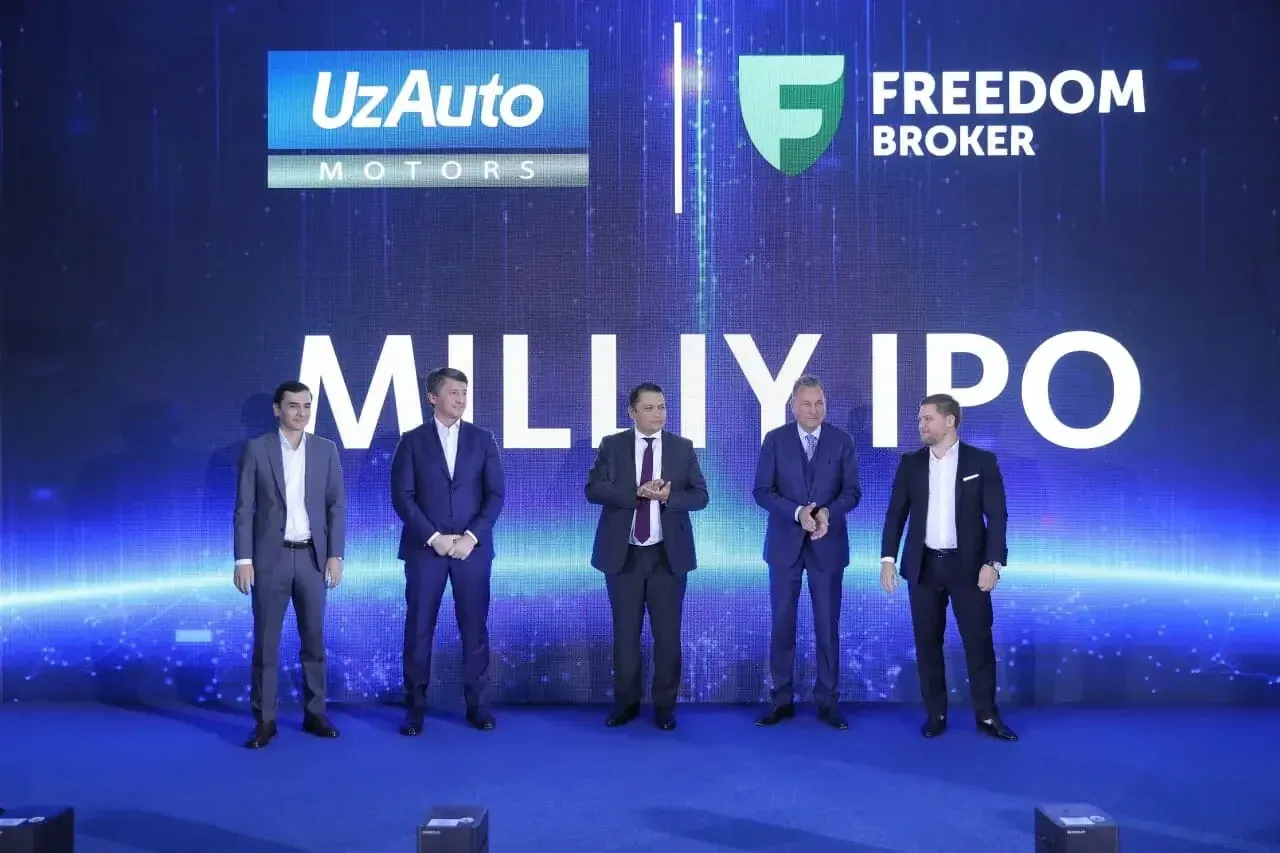
Photo: Freedom Broker UZ press office
By 28 December, the order book was only 8.65% covered. Over a month and a half, more investors wanted to buy UzAuto Motors shares — in the end about a third (29.1%) of the 1% was sold, raising UZS 56.9 billion, more than three times less than expected.
“The public offering of UzAuto Motors shares is considered the first step among large state-owned enterprises in the programme of privatisation and capital market development in our country. Undoubtedly, this event will have a positive impact on activating the local investor community and integrating the company into the global economic community,” UzAuto Motors said after the IPO.
The carmaker’s listing launched a large privatisation programme through public offerings in Uzbekistan. Last year a government resolution approved a list of more than two dozen issuers seeking investors. After UzAuto Motors, Uzmetkombinat is coming out with an additional share issue (FPO), and Uzbektelecom has already chosen an underwriter for its IPO.
The public is not aware
A total of 1,383 applications were submitted for the carmaker’s shares, including more than 1,000 from resident individuals, while non-residents and legal entities together numbered fewer than a hundred. Institutional investors bought 80% of the total shares sold and individuals 20% (about $1 million). This means the average ticket among retail investors was about $1,000.
“Expectations before the placement were different. Demand was forecast to exceed supply, as more than three million people in Uzbekistan use the company’s products. We thought most of the shares would be bought by residents, the average ticket would be $200–500 and at least 15,000–20,000 individuals would take part,” comments Yevgeny Mozheiko, executive director of Freedom Broker. In Mozheiko’s view, the market learned a good lesson: a well-known brand did not help the issuer at the IPO, because, due to a low investment culture and weak penetration of financial services, people simply did not understand why they should invest in UzAuto Motors shares and how they could earn from it.
“If we are saying there will be more IPOs in the autumn, then a PR campaign for the upcoming placements should start today in the state media, explaining to people what an IPO is, why it is done and what the advantages are of becoming a shareholder in the largest national companies,” Mozheiko is convinced.
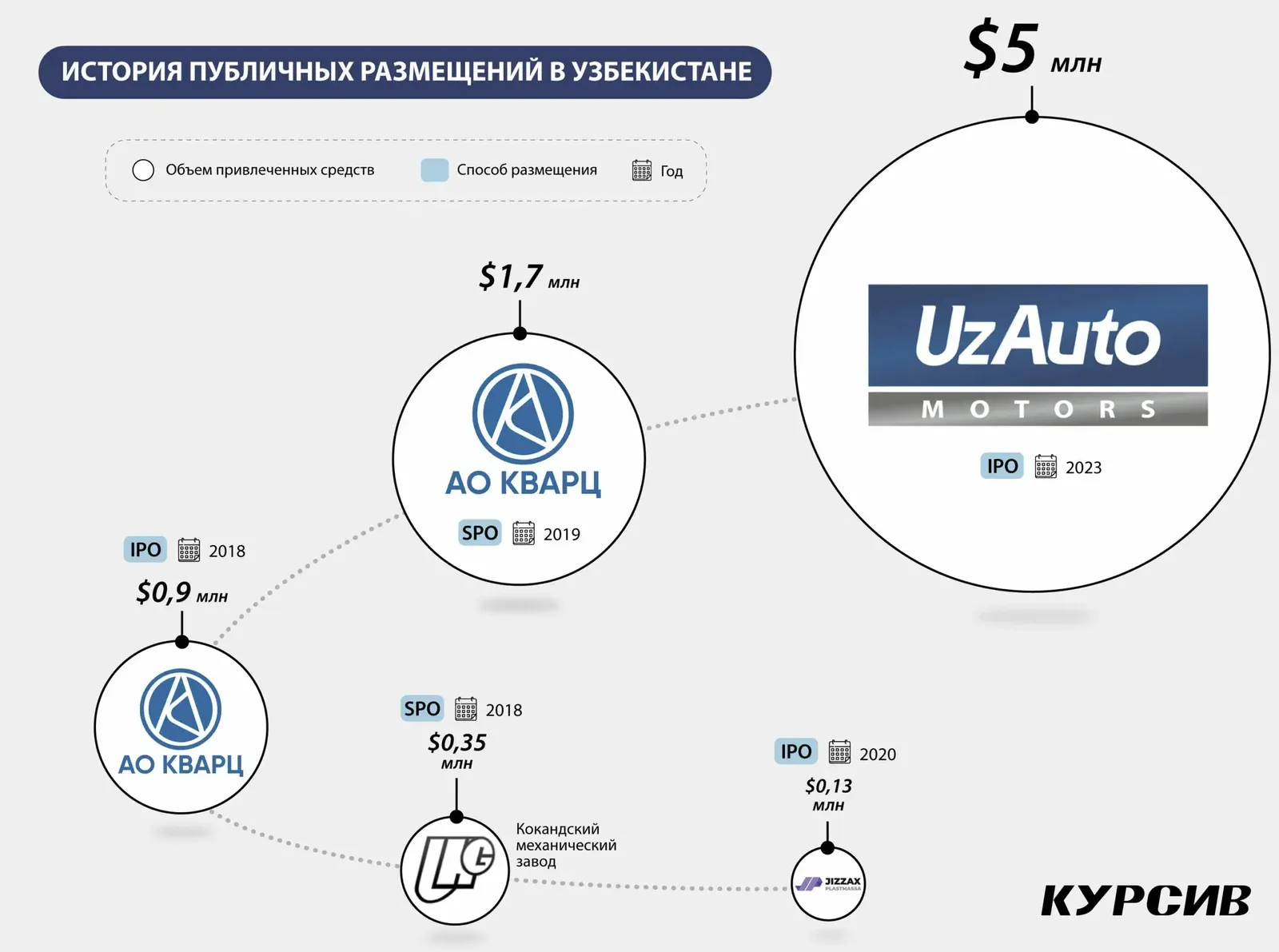
History of public offerings in Uzbekistan. Infographic: Kursiv
A bigger discount means a wider market
The UzAuto Motors placement was announced as a “people’s IPO”, so a discount was built into the share price. When discussing the terms, Freedom Broker proposed a discount of around 30%, the issuer asked for no more than 15%, and they agreed on 20%. In Yevgeny Mozheiko’s opinion, the discount is decent for the local market, especially given the issuer’s commitment to pay out at least 30% of net profit as dividends.
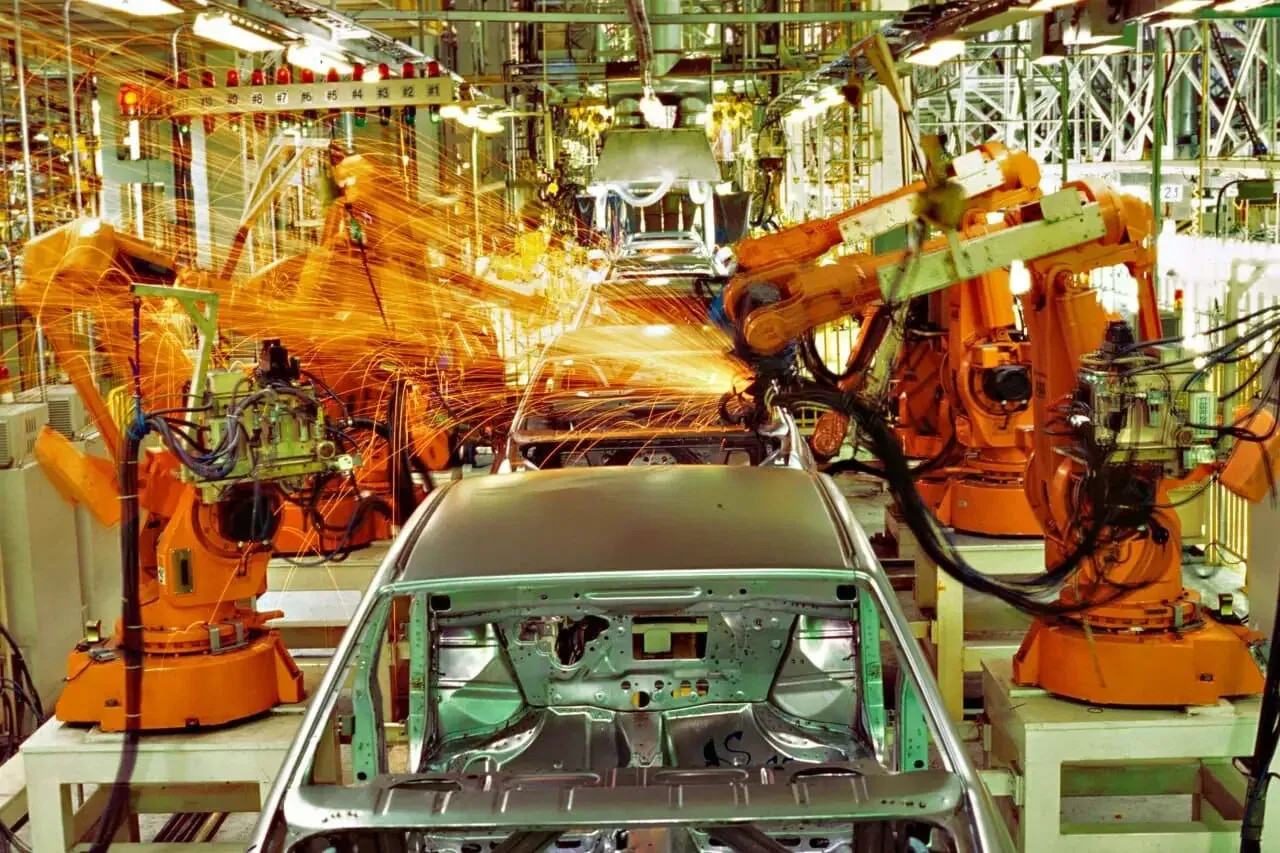
Photo: UzAuto Motors press office
Farrukh Khodjaev, director of the investment company Kapital-Depozit, has a different view. He believes that when setting the placement price, the organisers did not take the interests of retail investors into account. “Much of the blame lies with the issuer. The company was overvalued, and the underwriter’s recommendations on valuation were not accepted. In addition, the company’s negative image and reputation among the public made the underwriter’s job harder,” Khodjaev notes.
Behruzbek Ochilov, director of investment banking and research at Alkes Research, shares a similar view. “Discounts on shares should be larger in emerging markets than the one offered, especially given high deposit rates at Uzbek banks (above 20%. — Kursiv),” he believes. Ochilov recalls that the placement of Kazakhstan’s KazMunayGas was also undersubscribed. Another point he draws attention to is organisational: “It is very difficult to carry out placements without correspondent relationships with international depositories. Without such a tool, foreign investors enter the market cautiously.”
Second gear
At the IPO, UzAuto Motors shares were sold at the bottom of the placement range — UZS 72,500 per share. On 20 February, the first day of secondary trading, the share price rose 8.5% above the placement price (UZS 78,698) at the close. The intraday high reached UZS 85,000 and the low UZS 72,500. Trading volume was insignificant, around UZS 9 million, less than $1,000. On the second day results were even more modest, with a closing price of UZS 72,500 and trading volume of UZS 7.3 million (about $700).
“Unfortunately, UzAuto Motors shares were not traded as actively as we would have liked in the first two days. They were expected to be among the top three most liquid stocks on the exchange. But this has not happened yet. I think we need to wait for a new quarterly report or some significant news, after which we may see interesting market activity and price growth,” comments Behruzbek Ochilov.
The plant’s shares have already been included in the EqRe Blue liquid stock index, whose basket now contains ten Uzbek issuers. The exchange also has its own index, UCI, whose value is tied to the total capitalisation of all listed companies. Before trading began, UzAuto Motors’ market value was tied to the par value of its shares, UZS 5,000. The start of trading at the IPO price and the subsequent jump in the share price affected the company’s market capitalisation and helped the index rise by almost 25% on the first day, from 393.36 to 490.48 points, Indira Khabibulina, head of business development at the exchange, confirmed to Kursiv.
Alkes Research believes the carmaker’s shares have good potential, given the issuer’s investment programmes. Therefore, UzAuto Motors shares may be of interest to long-term investors. Recall that the Uzbek carmaker plans to increase production to 500,000 vehicles a year; in 2022 the plant produced 307,000 passenger cars.
UzAuto Motors is keeping its plans for a listing on foreign exchanges, but there is no exact timeline yet. Everything will depend on conditions in international financial markets, believes Yevgeny Mozheiko. In the current situation, doing so is not advisable.
Source: Kursiv