Where is Uzbekistan’s financial market heading? My takeaways from Timur Ishmetov’s Financial Times interview
An opinion column by Farrukh Khodjaev, founder and head of KAP DEPO.
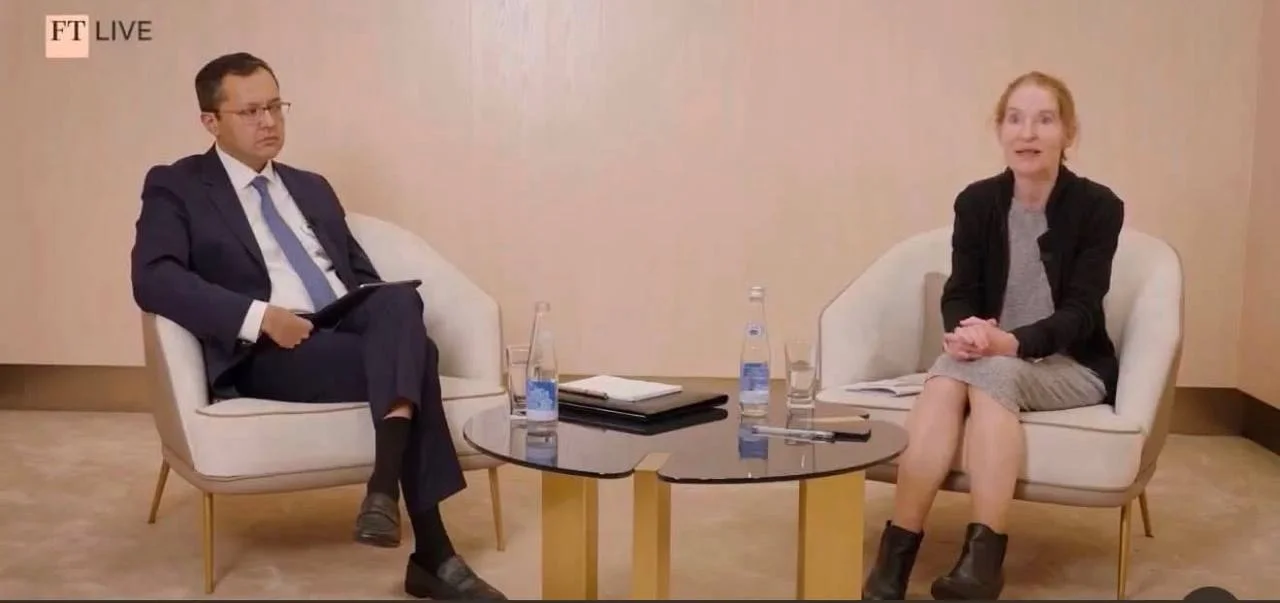
Today I watched the Financial Times interview with Timur Ishmetov, Chairman of the Central Bank of Uzbekistan.
Above all, I wanted to understand the logic of the central bank’s policy and how the regulator sees Uzbekistan’s financial market a few years from now.
I’ll say right away that I like Ishmetov’s approach. Let me highlight a few important points.
First: inflation remains the top priority.
The central bank aims to bring inflation down sustainably to 5%, while the policy rate is held at 14%.
The regulator is clearly in no hurry to ease monetary conditions for the sake of short-term economic stimulus.
Second: a market exchange rate for the sum.
I used to see the sum’s noticeable strengthening as a deliberate central bank policy to maintain a strong national currency and reduce the cost of servicing external debt. After the interview, I adjusted my view somewhat.
Ishmetov’s position is that the central bank should not decide how much the dollar should cost. The exchange rate should be set by the market.
A strong sum is not an end in itself. But if fundamentals allow the sum to strengthen, the regulator should not artificially prevent it.
Third: developing financing in the national currency and the financial market.
For me, as a capital market participant, this is perhaps the most interesting point.
For the central bank’s policy rate to genuinely affect the economy, an effective monetary transmission mechanism is needed:
central bank rate → interbank market → government bonds → deposits → corporate bonds → bank loans.
The central bank sets the price of the shortest money, and a developed financial market passes that signal further along the chain of the financial system.
That is exactly why Uzbekistan needs a deep money market, a strong repo market, a liquid government securities yield curve and a developed corporate bond market.
In my view, a developed bond market is not only an alternative source of financing for business. It is part of the infrastructure of modern monetary policy.
Fourth: further liberalisation of the capital account.
Here Ishmetov’s approach is cautious: residents’ opportunities to invest abroad should be expanded gradually.
The very fact that the central bank has already prepared a roadmap for further liberalisation of capital flows is, I believe, a very positive signal for Uzbek investors.
As a professional market participant, I support further liberalisation of capital flows. Investors should have a choice between local and foreign assets.
In my view, such competition will stimulate the development of the local stock market: quality issuers, new IPOs and corporate bonds, higher liquidity and stronger investor protection standards.
And finally — FinTech.
The central bank has set ambitious goals: Open Banking, a regulatory sandbox, an Innovation Hub, modern payment infrastructure and attracting $1 billion of investment into FinTech by 2030.
If this architecture can be built, we will have a completely different financial market, where the cost of capital is set by the market and real credit risk.
That is exactly the kind of financial market we want to see in Uzbekistan.